SAG-AFTRA 2026 Contract Changes: What Every AD Should Know
Union & Compliance
The 2026 SAG-AFTRA contract added an 8pm call time notice deadline and a walkaway meal rule. Turnaround, weekly rest, and overtime didn't move at all.
The 2026 SAG-AFTRA TV/Theatrical Agreement took effect July 1, ratified by 91.42% of voting members that June. If you're the one who builds the call sheet, exactly two of its changes touch your actual job: a new best-efforts deadline to give tomorrow's call time by 8pm tonight, and a requirement to disclose a walkaway meal the night before too.
Everything else people are talking about this contract for, the new residual formula, digital-replica consent language, background-actor coverage thresholds, belongs to casting, VFX, and your production accountant. None of it changes what you're building at your desk tonight.
This post covers exactly what changed for the AD department, what a walkaway meal notice actually requires, the meal penalty rate change (and why it isn't your number to track), and the longer list of things that didn't move at all, starting with turnaround.
The 8pm Call Time Notice, Explained
Under the 2026 agreement, productions must now use best efforts to give notice of the next day's call time by 8pm the night before. It's not a new call time rule. It's a new deadline for when you have to have committed to one.
For most shows this isn't a new problem so much as a new clock. If your department already tends to lock tomorrow's schedule in the late afternoon, this formalizes what you were already trying to do. If it usually gets nailed down at 9 or 10pm, that habit is now the thing to fix first.
The Walkaway Meal Notice
This one is easy to miss because it's a small operational detail buried in a big contract. It matters because a performer finding out at breakfast that lunch is on them plans their day very differently than one who knew the night before.
Practically, it means the walkaway decision has to be made and communicated on the same schedule as tomorrow's call time, not after. If your department nails one and misses the other, you've only half solved the actual requirement.
What Actually Changed vs What Stayed the Same
This is the part most ADs actually want to know first: did the numbers on your board move? For the ones you check every day, no.
Reference · SAG-AFTRA 2026 Agreement
What Changed vs What Stayed the Same
That last row matters more than it looks. Your turnaround math didn't move, your weekly rest math didn't move, and a run toward a 6th or 7th day premium still counts exactly the way it did before July 1. If a producer asks whether this contract changed your scheduling constraints, the honest answer is no, it changed your notice deadlines.
The Meal Penalty Rate Change (Not Your Number to Track)
The 2026 agreement reportedly moves principal performer meal penalties to a flat $75 per half-hour starting at the fifth half-hour past the meal window, replacing the old stepped $25/$35/$50 structure. Background performers reportedly move to $15 per half-hour on the same schedule.
None of it changes when a meal penalty triggers. The six-hour meal window is the same window it was in June. What changed is what a triggered penalty costs, and that math belongs to whoever cuts the checks, not to whoever builds the schedule.
What This Means for Your Call Sheet Workflow
The two real changes both land on the same document, at the same moment: your call sheet, the night before. That's a workflow problem more than a rules problem, and it has a workflow fix.
Lock tomorrow's schedule earlier in the day, not at 6pm
An 8pm notice deadline only works if the schedule it's reporting on is actually decided by then. Move your internal lock time up, not just your send time.
Decide the walkaway call at the same time as the call time
Don't let catering and scheduling make this call on separate timelines. If tomorrow is a walkaway meal day, that decision needs to be final before you draft the sheet.
Send the call sheet before 8pm, not exactly at 8pm
Best efforts reads very differently to a performer whose sheet lands at 7:45 versus 8:15. Build in a buffer, don't aim for the deadline itself.
Recheck turnaround before you send, not after
A late schedule change that fixes your 8pm notice problem can quietly create a turnaround problem instead. Confirm both before the sheet goes out, not after someone flags it the next morning.
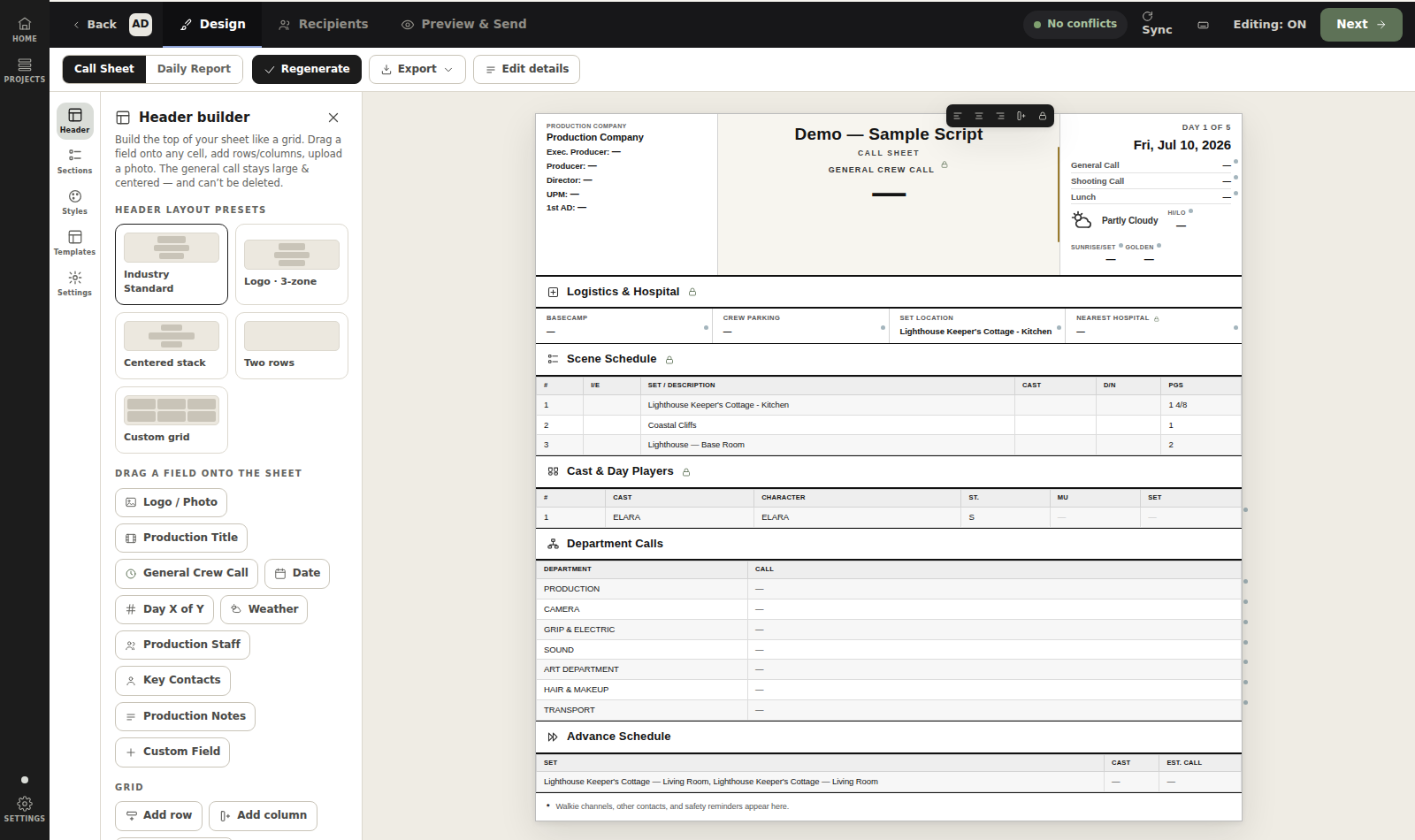
Building a call sheet earlier only works if the schedule feeding it is stable earlier. That's the same discipline behind a good stripboard: the more of the day's decisions you lock before the evening scramble, the less your 8pm deadline actually costs you.
SAG-AFTRA 2026 Contract Changes FAQ
When did the 2026 SAG-AFTRA TV/Theatrical Agreement take effect? July 1, 2026, following a June 2026 ratification vote. It's a four-year deal, running through June 30, 2030.
Is the 8pm call time notice a hard deadline? It's written as a best-efforts standard, not an absolute guarantee with a fixed automatic penalty the way a missed turnaround has one. That doesn't make it optional. It's a real, written expectation now, not just an industry norm.
Did SAG-AFTRA turnaround rules change in 2026? No. Turnaround, weekly rest, the meal window, and the overtime structure all carried over unchanged from the prior agreement. The scheduling math you already run still applies.
What counts as a walkaway meal? A meal period where the production doesn't provide food and the performer is responsible for their own. The 2026 agreement requires notice of a walkaway meal the night before the work day, the same timing as the new call time notice.
Do these changes apply to IATSE crew too? The 8pm call time notice and walkaway meal notice are SAG-AFTRA TV/Theatrical Agreement provisions. IATSE's 2026 contract activity moved different terms, mainly overtime bands and Low Budget Theatrical wage figures, not these two notice requirements.
Where can I read the actual contract language? Start with SAG-AFTRA's own 2026 TV/Theatrical Contracts page. Nothing in this post, or any blog post, replaces reading the signed agreement your production is actually working under.
The Deadline Moved. The Math Didn't.
Two real things changed for your desk: an 8pm best-efforts call time notice and a night-before walkaway meal notice. Everything else in this contract that's making headlines, the rate restructuring, the residual formula, belongs to a different department.
AD PrePro back-times your call sheet from the shooting call and keeps turnaround and rest checked as the schedule moves, so hitting an earlier notice deadline doesn't mean building the sheet against the clock. Upload your schedule and see it ready well before 8pm.